Designing for People – Usability & Quality of Stay
Good construction projects must work technically and commercially while meeting requirements for energy demand, material selection and use. Equally important is how people actually use and experience buildings and outdoor spaces.
That is why we consider usability and quality of stay to be integral parts of robust project development – indoors and outdoors.
Usability begins in everyday life
Good usability often shows in simple things: clear floor plans, short and logical routes, good orientation, sensible room layouts, flexible use, sufficient daylight, good accessibility, practical circulation and suitable storage and ancillary areas.
These aspects should be considered as early as possible. Later changes are often technically complex and commercially expensive.
Quality of stay indoors
A room is not good simply because it is functional. Proportions, daylight, acoustics, materials, temperature, visual relationships and opportunities for interaction or retreat also influence how people experience spaces.
Different uses place different requirements in the foreground. Our aim is therefore not a standardised solution, but an appropriate level of quality for the respective use.
Outdoor spaces are part of the building concept
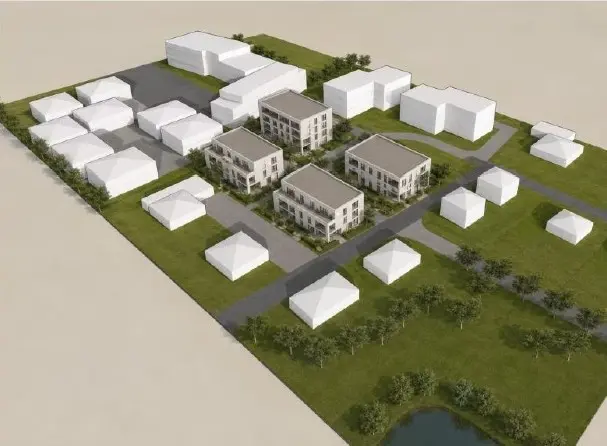
Outdoor areas are often considered late in construction projects, even though they have a major influence on the quality of a location. Clear and safe routes, usable places to spend time, green and planted areas, shading, wind and weather protection, and opportunities for interaction and retreat all shape how a building or neighbourhood is experienced in everyday life.
In residential projects in particular, outdoor spaces, bicycle parking, low-barrier access and opportunities for play and movement are part of a holistic view of usability.
Climate-adapted outdoor spaces
With rising temperatures and more frequent extreme weather, the design of outdoor spaces is becoming even more important. Greenery, shading, suitable surfaces, rainwater management and vegetation can help improve quality of stay even on hot days.
Climate-adapted planning therefore links technical requirements with one central question: How can buildings and outdoor spaces remain pleasant and usable over the long term?
Commercial viability and quality are not opposites
Good usability and quality of stay do not necessarily lead to higher construction costs. The key is to define requirements early and prioritise them sensibly.
For us, economical construction does not mean reducing quality as far as possible. It means directing cost to where it creates genuine long-term value. Good usability can reduce later conversions, enable different use scenarios, avoid vacancies and help protect the long-term value of a property.
Buildings and outdoor spaces should not only function. They should work for the people who use them every day.