WGJA HOUSING COOPERATIVE · HAMBURG
Living together. Sharing responsibility. Developing existing buildings.
In western Hamburg, a residential project was created in the mid-1990s that deliberately chose a different path. People of different ages decided not only to live next to one another, but together – independently, cooperatively and with mutual responsibility.
Today, the project combines its social concept with a new task: developing the roughly three-decade-old building stock so that it remains technically, commercially and energetically fit for the future.
A residential project with history
The origins lie in the association Wohngemeinschaft Jung und Alt (a community living association for younger and older people). People looking for new forms of living came together there: independent, community-oriented and responsible for one another.
1992 · Formation of an initiative group
1993 · Allocation of a site in Hamburg-Flottbek
1994 · Foundation of the housing cooperative, officially named Wohnungsbaugenossenschaft Jung und Alt e.G.
1995 · Ground-breaking, foundation stone and topping-out ceremony
1996 · All members moved in
1997–1998 · Bicycle house, garden and community building
Today · Established housing stock with an active community
Three residential buildings and shared facilities
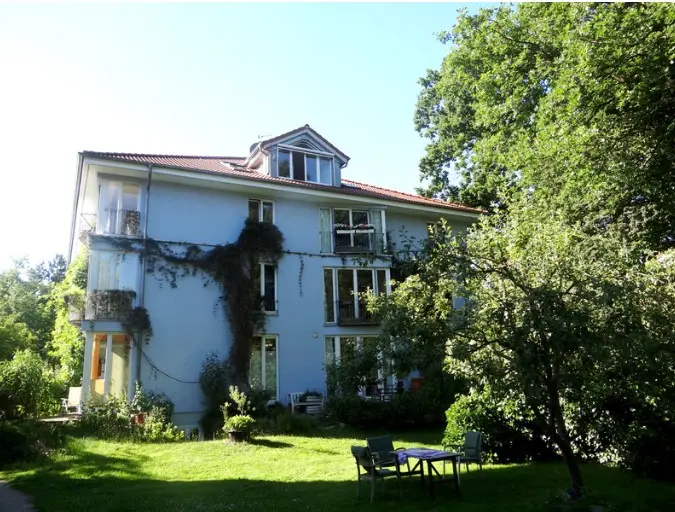
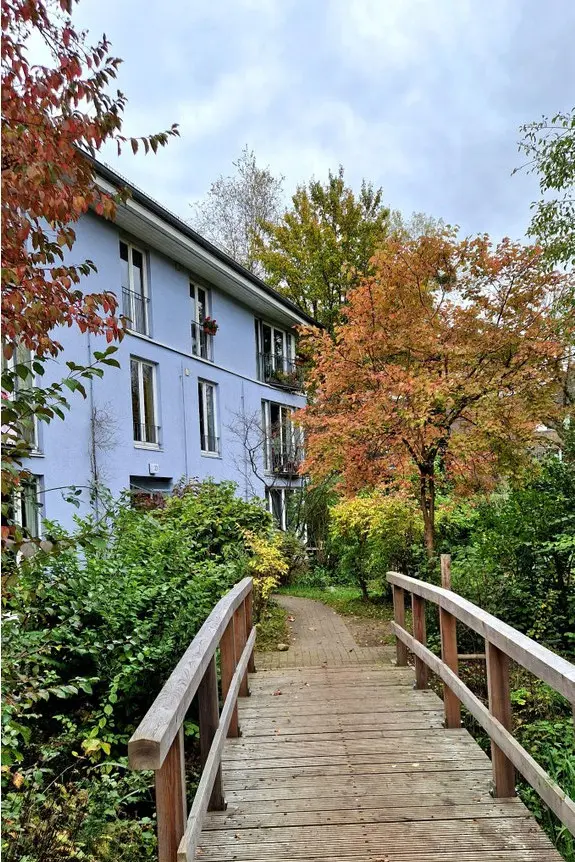
The property at Heinrich-Plett-Straße 29–33 consists of House 29 · North House, House 31 · Middle House and House 33 · South House. The residential complex is complemented by shared areas and ancillary buildings.
Community is more than a form of housing
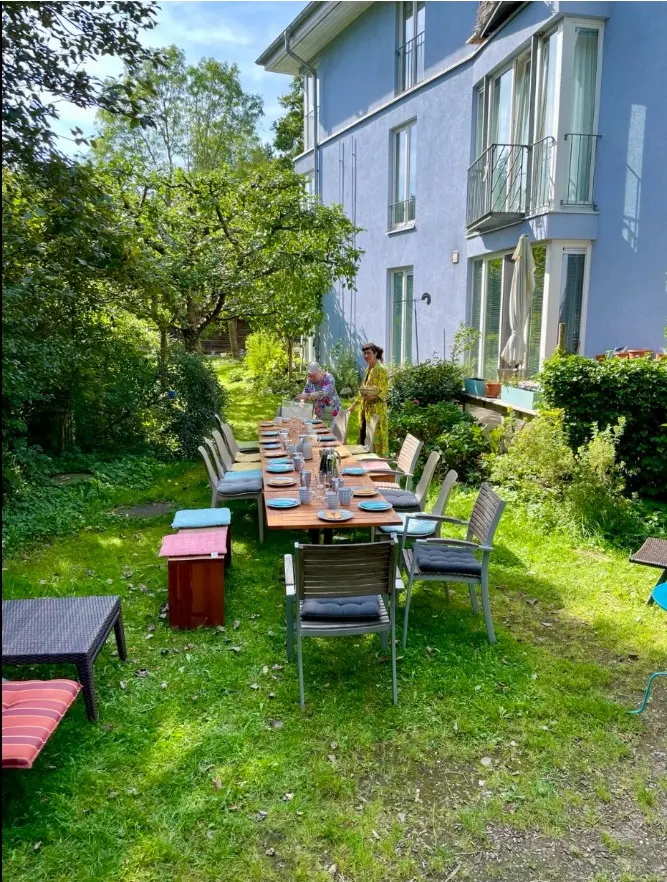
As a cooperative, Jung und Alt is organised collectively. Participation also means responsibility – for decisions, tasks, shared property and living together.
Community does not mean harmony at any price. It means actively managing differences, addressing conflicts and developing solutions together.
From residential project to existing-building development
After around three decades, the task is changing. The focus is increasingly on systematic maintenance, prioritising necessary refurbishment measures and deciding how heat and energy supply can be developed sensibly over the long term.
Restructuring maintenance planning
The existing maintenance plan is being reorganised from a technical and commercial perspective. Areas under review include roofs, windows, balconies, façades and plinths, stairwells, sanitary areas, outdoor spaces and shared buildings.
Understand the existing stock · Assess need for action · Prioritise measures · Plan investment
Energy-related development
The heat supply is also under review. What matters is a robust overall strategy. The focus includes energy consumption, hot-water demand, circulation losses, storage, controls and pumps, hydraulic balancing, existing solar thermal systems, photovoltaic potential and the feasibility of a heat-pump solution.
Our role in the project
We support the housing cooperative in structuring the upcoming tasks from both a technical and commercial perspective.
We connect building condition and maintenance needs, energy supply and technical feasibility, as well as measures planning and commercial viability.
Our tasks:
Review and structure maintenance planning
Establish maintenance and measures planning
Prioritise measures
Make investment requirements transparent
Assess the energy baseline
Develop options for moving away from gas supply
Evaluate heat-pump, photovoltaic and solar-thermal concepts
Consider funding opportunities
Prepare decision-making documents
A learning residential project – even after three decades
The story of Jung und Alt did not end when residents moved in in 1996. A community housing project has to continue developing – socially, organisationally and physically.
Preserve what works. Recognise what needs to change. Prepare decisions so that both community and buildings have a future.